
South Africa’s immigration crisis didn’t happen by accident, it’s the product of years of economic strain, weak border control, and political neglect. As the country reaches a boiling point, the government’s deportation system stands exposed: slow, costly, and riddled with inefficiency. The rhetoric is fierce, but the reality of enforcement is far more fragile.
South Africa’s immigration tensions didn’t suddenly explode, they boiled over because the state let the pot burn unattended. This crisis isn’t really about foreigners. It’s about a government that can’t secure its borders, can’t enforce its laws, and can’t deliver economic stability to its own people.
With unemployment sky‑high and inequality deepening, undocumented migrants have become the most visible symbol of a society under strain. People are angry, and in a vacuum of leadership, anger becomes policy.
Meanwhile, porous borders and criminal syndicates make illegal crossings routine. The state can’t even say how many undocumented migrants are in the country. When a government can’t count, it can’t control, and public trust collapses.
Inside the system, the dysfunction is just as stark. Home Affairs is overwhelmed, enforcement is inconsistent, and rights violations sit alongside bureaucratic paralysis. It’s a machine that fails at both compassion and control.
Crime narratives pour petrol on the fire. Politicians link undocumented migrants to organised crime, even though police data shows most offences are committed by South Africans. But fear is easier to weaponise than facts.
And now, as pressure peaks, South Africa is being forced to confront a question it has dodged for years: what does enforcement actually look like? The country’s deportation laws allow for arrest, detention, and removal, but in practice, deportations are slow, costly, legally messy, and riddled with corruption. The state talks tough about mass removals, yet the machinery behind those promises is rusted and barely functional.
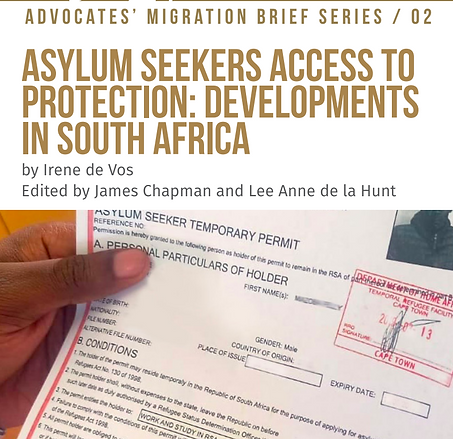
South Africa’s Deportation Laws
South Africa’s deportation system is governed mainly by the Immigration Act 13 of 2002 and its amendments. Those who can be deported are Undocumented migrants, Overstayers, People who breach visa conditions, people declared undesirable (e.g., overstaying, fraud, criminality). All these fall under Section 32 of the Immigration Act. When it comes to Re‑entry bans, overstayers are declared undesirable and banned for: 1 year (short overstay), 2 years or 5 years for long or repeated overstays. These bans apply even if the person leaves voluntarily.
South Africa’s Deportation Agreements With Other African States
South Africa does not have EU‑style formal “returns treaties” with most African countries. Instead, it uses a mix of:
-
Bilateral readmission agreements
-
Memoranda of Understanding (MOUs)
-
Diplomatic arrangements
-
Consular cooperation\
Here’s what exists in practice:
🇿🇼 Zimbabwe
South Africa and Zimbabwe have long‑standing readmission cooperation, including:
-
Fast‑track deportations via Beitbridge border
-
Zimbabwean officials verifying nationality
-
Regular deportation convoys
There is no formal treaty, but a strong operational agreement.
🇲🇿 Mozambique
One of the most structured arrangements:
-
Joint border operations
-
Mozambican officials stationed in SA detention centres
-
High‑volume deportations through Lebombo border post
This is one of SA’s most efficient return channels.
🇲🇼 Malawi
Cooperation exists through:
-
MOUs on migration management
-
Charter flights for group deportations
-
Consular verification processes
🇳🇬 Nigeria
South Africa and Nigeria cooperate through:
-
Diplomatic channels
-
Case‑by‑case verification
-
Charter flights for mass returns (used during xenophobic violence periods)
No formal treaty, but strong political coordination.
🇨🇩 DR Congo
Returns are slower because:
-
Verification of nationality is difficult
-
DR Congo often requires proof of origin
-
Deportations usually happen via escorted flights
🇪🇹 Ethiopia
One of the most challenging return relationships:
-
Ethiopia often disputes nationality
-
Deportations can take months
-
Many Ethiopians arrive without documents
-
SA sometimes uses group charter flights when verification succeeds
🇸🇴 Somalia
South Africa rarely deports to Somalia due to:
-
Security concerns
-
Statelessness issues
-
Lack of functioning civil registry
Most Somalis are released or processed through asylum channels
How Deportation Works in South Africa — Step by Step
1. Initial stop and document check
A person is stopped by:
-
Police
-
Immigration officers
-
Home Affairs inspectors
They may ask for documents only to verify legal status.
If the person cannot produce valid documents, they may be taken for verification.
Key rights:
-
To be told why you are being stopped
-
To contact someone
-
To request an interpreter
2. Verification of immigration status
Home Affairs checks:
-
Passport
-
Visa or permit
-
Asylum seeker or refugee documents
-
Whether the person is listed as “undesirable”
If the person does have valid documents, they must be released.
If not, they may be classified as an illegal foreigner.
3. Issuing a notice of deportation
If Home Affairs decides the person is unlawfully present, they issue:
-
A written notice stating the person is an “illegal foreigner”
-
A deportation order under Section 34
-
Information about the right to appeal
This is an administrative process — not a criminal conviction.
4. Detention for deportation
The person may be detained only for the purpose of deportation.
Detention can occur at:
-
Police stations
-
Correctional facilities
-
Lindela Repatriation Centre (main immigration detention site)
Legal limits:
-
First 30 days without a court warrant
-
Can be extended by a court up to 120 days maximum
-
After 120 days, the person must be released
Rights during detention:
-
Food, medical care, humane treatment
-
Access to a lawyer
-
To challenge detention in court
5. Court oversight
If detention continues:
-
Home Affairs must apply to a magistrate for extensions
-
The detainee may challenge detention via habeas corpus
-
If the court finds detention unlawful, the person must be released
Courts often intervene when Home Affairs fails to follow procedure.
6. Verification with the home country
Before deportation can happen, South Africa must confirm:
-
The person’s nationality
-
That the home country will accept them
-
That travel documents can be issued
This step is often the biggest delay, especially for:
-
Ethiopia
-
DR Congo
-
Somalia
Countries like Zimbabwe and Mozambique cooperate more quickly.
7. Arranging travel documents
If the person has no passport, Home Affairs requests:
-
Emergency travel documents
-
Laissez‑passer
-
Consular confirmation
Without these, deportation cannot proceed.
8. Transfer to Lindela (if not already there)
Most deportations go through Lindela Repatriation Centre, where:
-
Groups are assembled by nationality
-
Travel logistics are finalised
-
Escorts are assigned
Lindela is the final staging point before removal.
9. Physical removal from South Africa
Deportation happens either by:
Land
For neighbouring countries (Zimbabwe, Mozambique, Lesotho):
-
Deportees are transported in groups
-
Escorted to border posts (e.g., Beitbridge, Lebombo)
-
Handed over to authorities on the other side
Air
For other African countries:
-
Escorted flights
-
Group charter flights
-
Commercial flights with immigration escorts
Once the person leaves South Africa, the deportation is complete